
Introduction
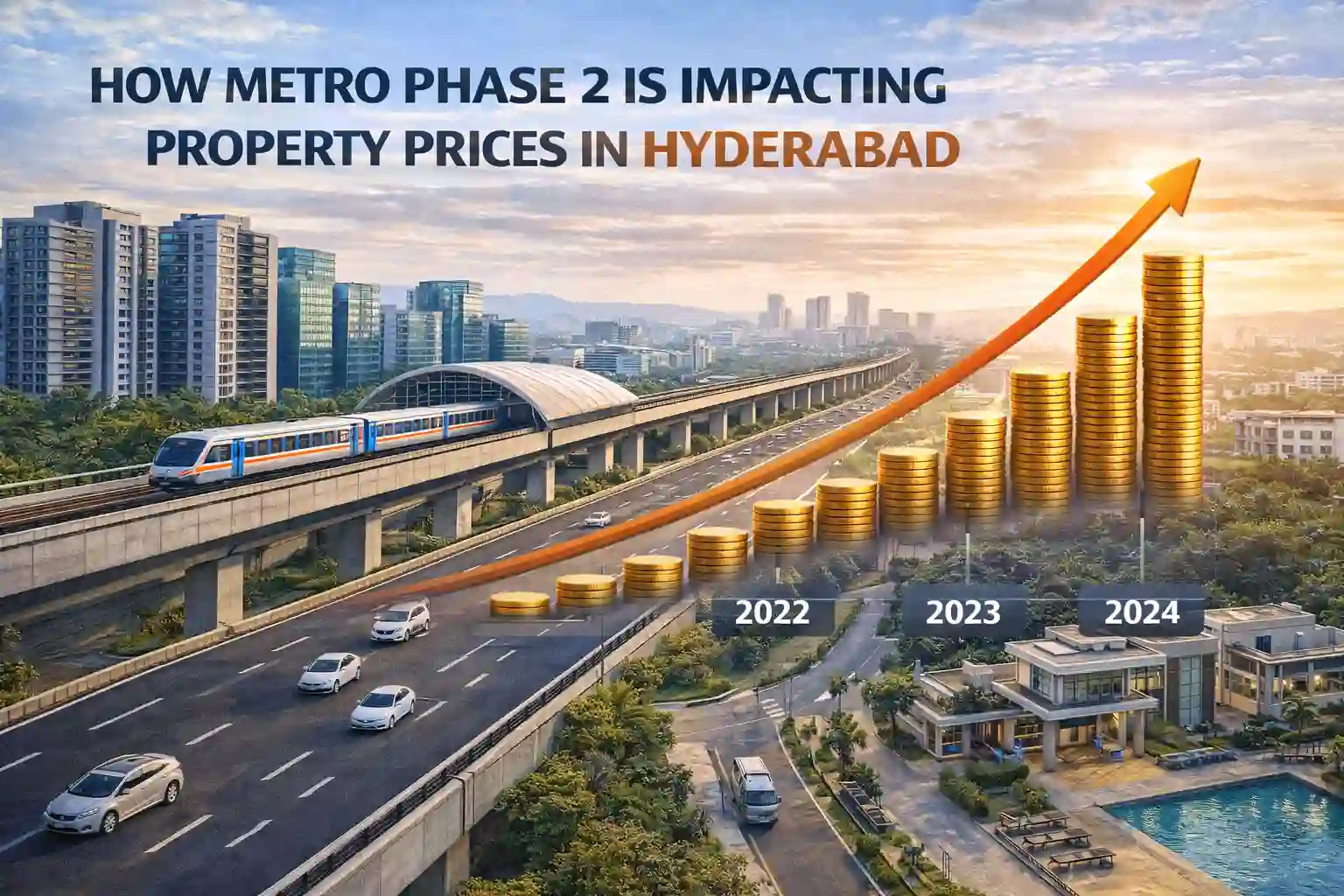
Transit systems reshape metropolitan real estate by redefining “effective distance.” The announcement and construction of Metro Phase 2 in Hyderabad are producing clear market signals: developers prioritizing station-adjacent plots, early buyers seeking appreciation, and renters looking for commute-friendly options. This article analyzes the mechanisms of impact, which property types will benefit most, and an investor playbook keyed to timelines and station proximity.
How metro reduces friction and increases land value
- Lower commute costs/time: Reduces the value penalty of living further from job centres.
- Demand concentration: Retail and F&B follow footfall; last-mile commerce increases.
- Institutional interest: Banks and institutional developers prefer projects with predictable demand; lending flows more easily when mass transit is present.
- Speculation & pricing momentum: Pre-announcement and construction stages create speculative interest in parcels near stations.
Which corridors and nodes to watch
(Replace with local station names and corridors when publishing.) Generally prioritize:
- Stations linking major employment hubs — highest short-term demand.
- Interchange stations — often command larger premiums.
- Areas lacking current road capacity — metro provides the primary relief and therefore stronger uplift.
- Transit-oriented development (TOD) zones designated by authorities — these often get favorable zoning and incentives.
Short-term vs long-term price impact
- Short-term (0–2 years): Speculative price appreciation near announced alignments; buyer caution is needed due to timeline slippage risk.
- Medium-term (2–5 years): Strongest uplift as civil works and visible station progress reduce uncertainty. Pre-launch projects near stations tend to re-rate.
- Long-term (5+ years): Stabilized premium for properties that provide genuine connectivity and delivered station area development (retail, feeder services).
Product types that benefit most
- Compact apartments (1–2 BHK): Appeal to commuters and young professionals; strong rental demand.
- Mixed-use & retail shops near stations: Benefit from footfall; high yield potential.
- Ready-to-move mid-rise projects: Offer immediate occupancy for renters unwilling to wait for metro commissioning.
- Plotted developments: Less likely to benefit unless there’s an explicit TOD framework or zoning change.
Investor playbook
- Map the alignment: Use official corridor maps; avoid relying on social-media rumors.
- Time your entry: Buy near-completion projects for lower delivery risk or very early pre-launch for highest upside — both have trade-offs.
- Walk the last-mile: If a property is 1–2 km from the station, check feeder transport (shuttle, buses, autos). Properties with planned feeder infrastructure will perform better.
- Model three scenarios: conservative, base, and optimistic price appreciation over 5 years.
- Prefer mixed-use or integrated projects near interchange stations for higher liquidity.
Risks to watch
- Civil completion delays: Infrastructure timelines slip; price spikes can reverse if projects stall.
- Speculative bubbles: Avoid paying a very steep premium in early speculative phases.
- Changing demographics: If metro encourages office decentralization, certain micro-markets may face oversupply.
Conclusion
Metro Phase 2 is a structural catalyst. Savvy buyers will align property type and purchase timing with the corridor’s stage: pre-announcement stage for high-risk/high-return plays; construction-visible stage for balanced risk/return; near-completion for lower risk and ready rental income.