
Introduction
Homebuyers in Hyderabad increasingly demand more than four walls — they want convenience, security, and long-term savings. That demand has driven the rapid adoption of smart gated communities: residential projects that integrate building automation, digital security, energy efficiency, and community management into a single, tech-forward package. This article explains what developers mean by “smart,” why buyers are paying premiums, and how investors and homebuyers can evaluate these projects.
What “smart” actually includes
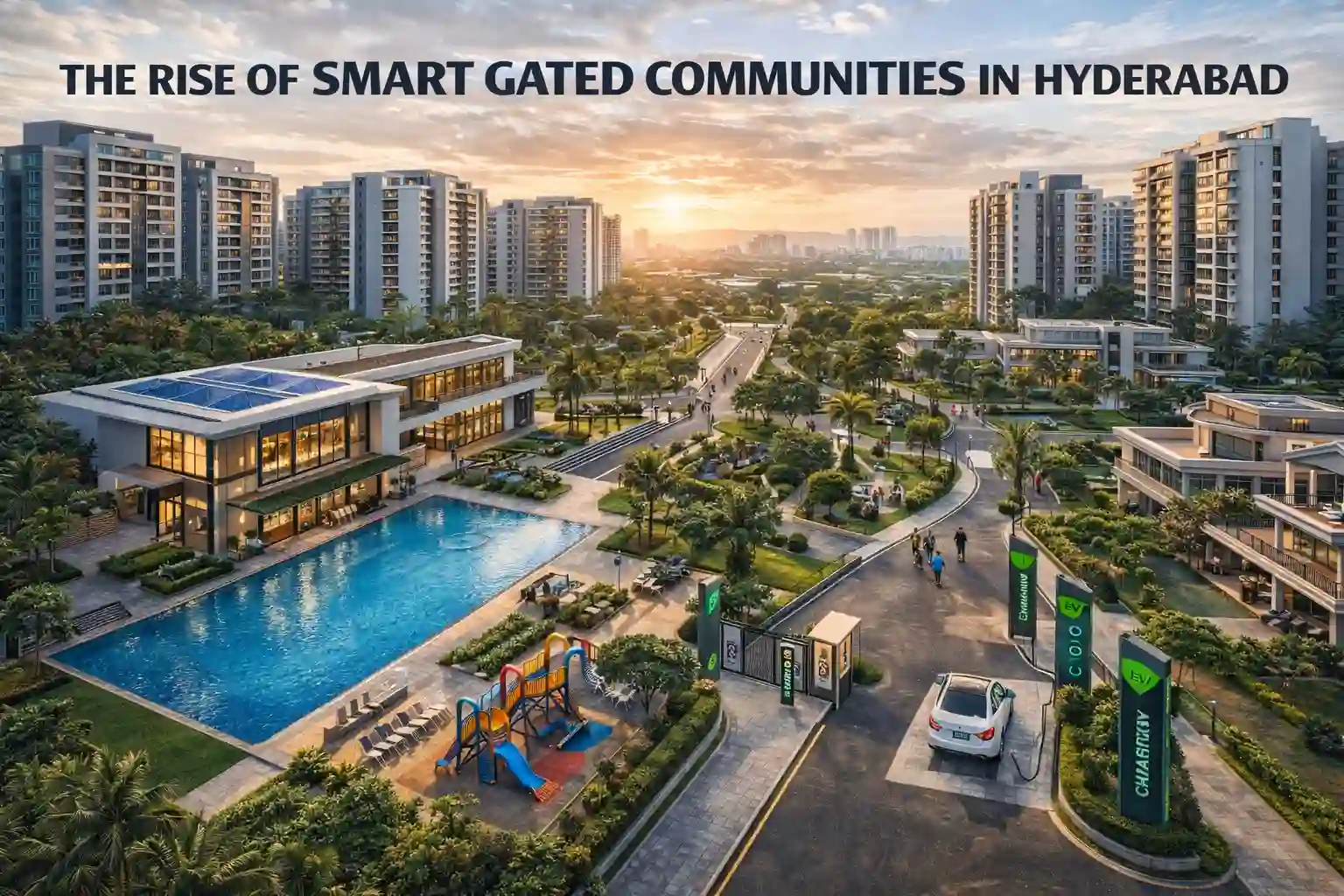
A smart gated community is more than CCTV and a swipe card. Common components include:
- Digital access control — visitor pre-registration, QR/biometric entry, and app-driven gate control.
- Centralized security dashboard — real-time feeds, AI-based anomaly detection, and incident logging.
- Building/home automation — smart thermostats, lights, and appliance control integrated with an owner app.
- Energy management — solar microgrids, smart meters, and load balancing to reduce bills and carbon footprint.
- Connected amenities — app bookings for clubhouses, courts, activity calendars, and package locker systems.
- EV readiness & micro-mobility — charging pods, scooter/bike docks, and route-mapping for residents.
- Data & analytics — maintenance forecasting, consumption trends, and occupancy analytics for the community manager.
Why buyers and tenants prefer smart communities
- Convenience: Unified app controls reduce friction (bookings, payments, visitor entry).
- Safety: Faster incident response and fewer false alarms thanks to analytics.
- Lower operating costs: Solar + battery systems plus smart meters cut recurring utility bills.
- Higher resale/rent premiums: Tenants and buyers pay more for verified security and energy savings.
- Community experience: Organized events, shared services, and transparent governance improve resident retention.
How smart features affect pricing and ROI
Developers charge a premium for smart features — typically a 5–15% price uplift depending on the breadth and vendor credibility. But you should model both cash and non-cash benefits:
- Higher rent / resale price — rented units in feature-rich communities command better yields.
- Lower maintenance & utility spend — solar and efficiency features reduce recurring operating costs.
- Faster leasing & improved occupancy — better resident experience shortens vacancy durations.
Run a 5-year cash flow model comparing (A) a conventional gated community vs (B) a smart community. Include estimated lease-up time, rental premium, lower energy cost, and a 0.5–2% faster annual appreciation premium for high-quality smart builds.
Buyer checklist: evaluating a “smart” project
- Vendor transparency: Ask for hardware & software vendor names, warranties, and support SLAs. Beware generic “smart integration” claims with no vendor proof.
- Data privacy: Who stores resident data? Is it encrypted? Check the privacy policy and data retention terms.
- Interoperability: Can owners connect third-party devices, or is the system proprietary and closed?
- Ownership transferability: Confirm that software access and admin controls transfer to individual apartment owners / association on handover.
- Operational readiness: Does the developer include a trained on-site IT/security team, or is that outsourced?
- Maintenance & upgrade roadmap: Hardware ages; confirm a plan and budget for future upgrades.
- Real cost vs brochure cost: Understand which features are included vs optional add-ons (EV chargers, home automation kits, etc.).
Risks & mitigations
- Vendor lock-in: Insist on open standards or documented APIs.
- Cybersecurity risk: Prioritize projects with periodic third-party security audits and penetration tests.
- False promises: Request a demo unit and conduct an on-site test of critical features.
- Higher CapEx vs uncertain yield: Use conservative rental-premium assumptions in your financial model.
Conclusion & practical advice
Smart gated communities are shifting from “nice-to-have” to table-stakes in many new developments. They are especially attractive to young professionals and tech-savvy families who value security, convenience, and sustainability. If you’re buying or investing, focus on real, measurable benefits (reduced utility bills, demonstrable security improvements) and validate every vendor claim before booking.